


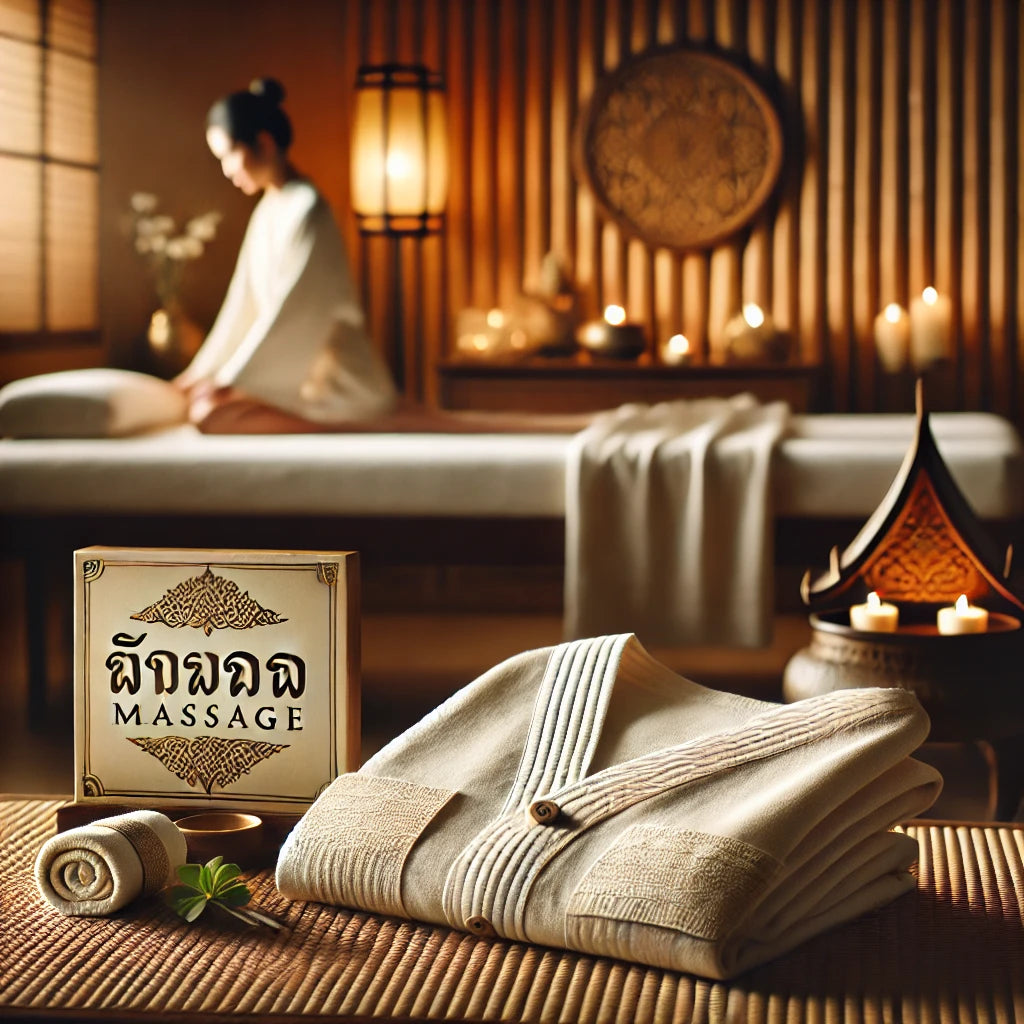



Imagine walking into a cosy studio, the scent of essential oils in the air, soft music playing in the background, and you’re ready to relax completely. You’ve booked a Thai massage, a traditional form of massage from Thailand. But suddenly you find yourself wondering: what should you wear for a Thai massage? Many people ask themselves this, especially before their first Thai massage. Here you’ll find out which clothes work, what the studio usually provides and how to prepare.
Show table of contents
- Next article: Is Thai massage painful? How firm is too firm
- Next article: What is the difference between a normal massage and a Thai massage?
- Next article: How does a Thai full-body massage work? Step by step
- Next article: How often should you get a Thai massage?
- Next article: Should you shower before a massage?
- Next article: Why does Thai massage hurt?
Summary/TLDR
For a Thai massage, you generally wear comfortable, loose-fitting clothing that gives you freedom of movement. The studio often provides suitable clothing. Choose light, breathable fabrics and leave your jewellery at home.
What is a Thai massage?
Origins and technique
Thai massage, also known as Nuad Phaen Boran, is a traditional Thai form of massage that combines elements of yoga, acupressure and passive stretching. According to Thai tradition, it works along energy lines known as Sen, which it is meant to balance. That is the idea of the traditional teaching; it is not medically proven.
What happens during a Thai massage
A typical Thai massage lasts around 60 to 120 minutes. The therapist uses their hands, elbows, knees and feet to apply pressure to certain points of the body and to stretch it. Unlike Western massage techniques, the focus is less on oils and more on pressure and movement.
What to wear for a Thai massage
Comfortable clothing is essential
Why comfortable clothing matters
During a Thai massage, you are moved into various positions that require full freedom of movement. Tight-fitting clothing can get in the way and make you less comfortable.
What counts as comfortable clothing?
Loose trousers and T-shirts made from soft, breathable materials such as cotton or linen are ideal. These fabrics let your skin breathe and make sure you feel comfortable throughout the session.
Clothing provided by the studio
Many studios provide clothing
Many Thai massage studios give you special clothing for the massage. It usually consists of loose-fitting trousers and tops that are easy to put on and take off.
Hygiene and comfort
This clothing is comfortable and is washed after every use. If you are unsure, ask briefly when you book.
What not to wear
Avoid tight and uncomfortable clothing
Tight jeans, tight leggings or clothes with lots of buttons and zips are unsuitable for a Thai massage. They get in the way of the stretches and are often uncomfortable.
Leave your jewellery off
Rings, necklaces and bracelets can get in the way during the massage or even get lost. So take your jewellery off before the massage.
Preparing for a Thai massage
What to bear in mind before the massage
No heavy meals
Only eat light meals before the massage. A full stomach can be uncomfortable when pressure is applied to the abdomen.
Personal hygiene
It is a good idea to have a shower before the massage. It leaves you feeling fresh and shows respect for the therapist.
After the massage
Relaxation and rest
Take a few quiet minutes after the massage before going back to your day. After the stretches and the firm pressure, many people appreciate a short break.
Hydration
Many people enjoy a glass of water after the massage, especially after a long session in a warm room. There is no evidence, however, that the massage cleanses the body or boosts the metabolism.
How do you prepare for a Thai massage?
Do not eat anything heavy for about an hour before the massage. A full stomach can be uncomfortable during the pressure and stretching techniques; a light snack and a little water are better. Wear comfortable clothes made of a breathable fabric such as cotton, or use the clothing the studio provides. A shower beforehand is pleasant for you and for the therapist.
Also allow a few minutes to spare. If you arrive a little early, you can settle in, get changed and say beforehand where it twinges or what should be avoided.
What are the benefits of a Thai massage?
Many people find Thai massage loosening and soothing. To many, the passive stretches feel as though they are becoming more flexible, especially after sitting for a long time. The rhythmic pressure and the calm atmosphere help many people to switch off, and some report sleeping better afterwards.
Thai massage is not a treatment. If you have persistent pain or symptoms, have the cause checked by a doctor first.
What should you bear in mind after a Thai massage?
Avoid strenuous physical activity straight after the massage. After the firm stretches and pressure, a quiet hour is more pleasant, for example with a walk, gentle yoga or a book. Many people also find a warm bath soothing. Drink some water if you are thirsty.
The next day, your body may feel a little tired or slightly stiff, as after exercise; this usually wears off after one or two days. If the pain lasts longer, gets worse or is sharp, speak to your doctor. What is normal after a massage and what is not is covered in Pain after a massage.
What does a typical Thai massage session involve?
The session usually begins with a short conversation in which the therapist asks about any complaints and special wishes. That way the massage can be adapted. The massage itself often begins with you lying on your back, with gentle stretches and pressure to warm up the muscles.
You are then moved into various positions, from lying on your side to lying on your front, to reach different muscle groups and the points along the traditional Sen lines. The therapist uses not only their hands and fingers but also their elbows, knees and feet. A typical session lasts between 60 and 120 minutes and often ends with a short rest. The sequence step by step is shown in What happens during a full-body Thai massage?.
Is a Thai massage painful?
There is no one-size-fits-all answer to whether a Thai massage is painful, because the perception of pain varies from person to person. In general, Thai massage is more intense than many Western forms of massage. Firm pressure and deep stretches are part of it, and on tense areas this can feel uncomfortable.
A dull, pulling pressure that eases once the hold is released is normal. Sharp, stabbing or shooting pain is not. Say so straight away; a good therapist will adjust the pressure at any time. Why Thai massage sometimes hurts and where the limit lies is explained in Why does Thai massage hurt?.


Conclusion
A Thai massage is more pleasant if you are well prepared. The right clothing plays an important part in this. Comfortable, loose clothing gives you the freedom of movement the stretches need. Whether you use clothing from the studio or bring your own: the main thing is that you feel comfortable.
FAQs
1. Can I bring my own clothes to a Thai massage?
Yes, you can bring your own comfortable, loose-fitting clothes. Make sure they are made from breathable materials.
2. What should I do if the studio does not provide clothing?
Simply bring your own comfortable clothes. Loose trousers and a loose T-shirt are ideal.
3. Do I need to take off my jewellery before a Thai massage?
Yes, take your jewellery off before the massage so that nothing gets lost or damaged.
4. Can I do sport straight after a Thai massage?
Better not. Give yourself some rest after the massage and plan strenuous exercise for later.
5. How often should you have a Thai massage?
That depends on what you want. Many people go every one to two weeks, others less often. More on this in How often can you have a Thai massage?.
Modern massage chairs also imitate targeted pressure as you know it from acupressure and shiatsu. The shiatsu guide is a good place to start. You can try NAIPO massage chairs at over 40 partner locations across Europe, including in the UK. The store locator lists them and explains how to become a partner location.
Frequently asked questions

Written by NAIPO Editorial Team · Massage & Product Experts from Hamburg
Product experts, service technicians, and massage enthusiasts at Alsterwell GmbH — specializing in massage technology for over a decade, with our own workshop and showrooms for test sitting.
NAIPO Editorial Team · Sources verified


Leave a comment
This site is protected by hCaptcha and the hCaptcha Privacy Policy and Terms of Service apply.