


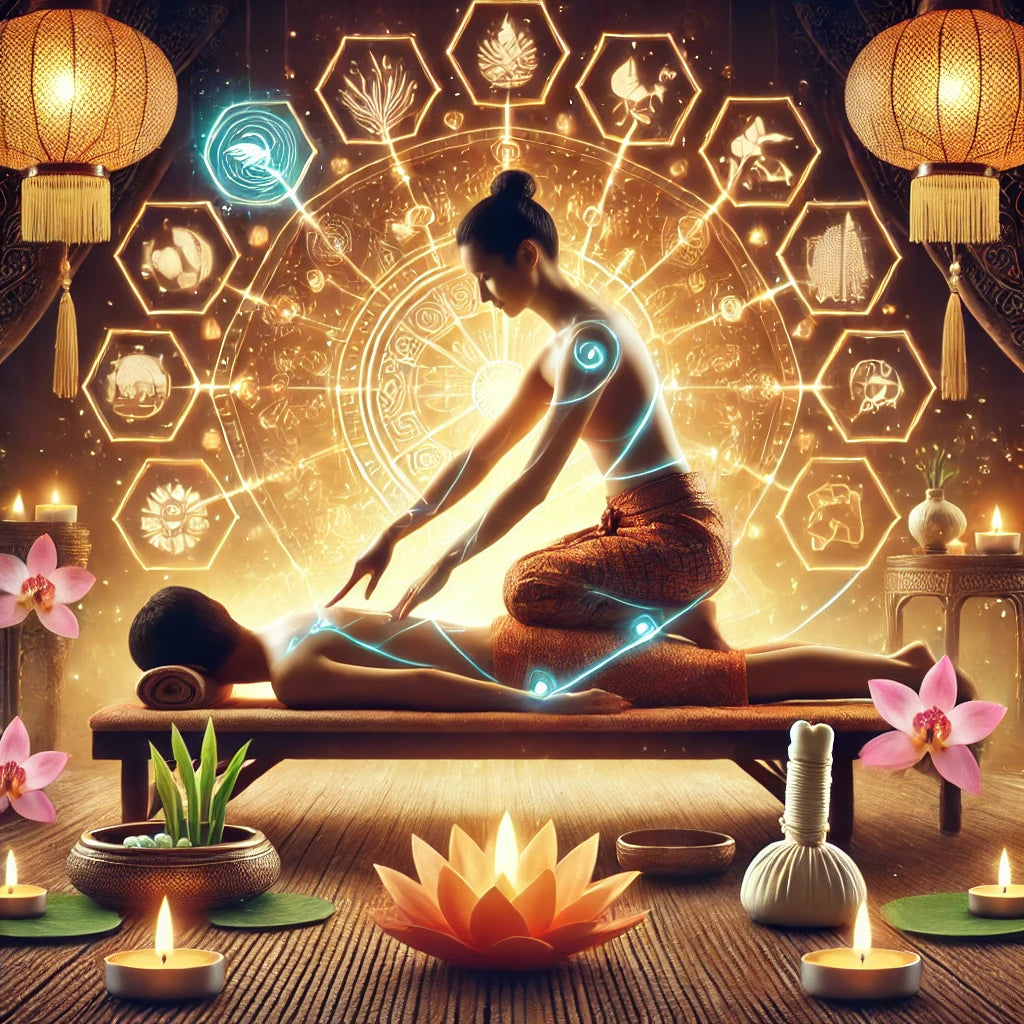



Have you ever wondered exactly what happens during a Thai massage? Imagine lying relaxed on a comfortable mat whilst an experienced masseur stretches and presses your muscles and joints. It sounds almost too good to be true, doesn’t it? But that’s exactly what you can expect from a Thai massage. In this article, I’ll take you on a journey through the fascinating world of Thai massage. From its origins to the techniques and benefits, you’ll learn everything you need to know. So, sit back, relax and let’s dive into the world of Thai massage together.
Show table of contents
Summary/TLDR
Thai massage is a traditional form of massage that originated in Thailand. It combines acupressure, Ayurvedic principles and yoga poses to stretch, relax and heal the body. A typical session lasts around 60 to 90 minutes and involves various techniques such as pressure point massage, stretching and elongation. The benefits are wide-ranging, from improved flexibility and stress relief to pain relief.
What is a Thai massage?
Origins and history
Thai massage, also known as ‘Nuad Thai’, originated in Thailand over 2,500 years ago. It was developed by Jivaka Kumar Bhaccha, an Indian physician and contemporary of the Buddha. The techniques and principles of Thai massage have been passed down and refined over generations, incorporating influences from traditional Chinese medicine and Indian Ayurveda.
Basic Principles of Thai Massage
Thai massage is based on the idea that the body is criss-crossed by energy lines, also known as ‘Sen’. These lines are similar to the meridians in Chinese medicine. The aim of the massage is to release blockages in these energy lines in order to improve the flow of energy and restore balance to the body.
The sequence of a Thai massage
Preparation and welcome
A typical Thai massage begins with a brief welcome and a chat, during which the masseur finds out about your needs and any health concerns you may have. You will then be asked to change into comfortable clothing, usually made of cotton, which allows you full freedom of movement.
The mat massage
Unlike Western massages, which are carried out on a massage table, Thai massage takes place on a mat on the floor. This enables the masseur to apply various levering and stretching techniques. You can find a detailed comparison under The difference between a standard massage and Thai massage.
Techniques and methods
Pressure-point massage
The masseur uses their hands, thumbs, elbows, knees and feet to apply pressure to specific points along the energy lines. This technique helps to release tension and promote the flow of energy.
Stretching
Thai massage involves many stretching movements derived from yoga. These stretches improve flexibility, relieve muscle tension and promote blood circulation.
Rhythmic movements
Another characteristic feature of Thai massage is the rhythmic, wave-like movements. These movements help to induce a deep state of relaxation and relieve stress.
The benefits of Thai massage
Physical benefits
Thai massage offers numerous physical benefits. It can relieve muscle tension, improve flexibility and alleviate pain. Furthermore, it promotes blood circulation and strengthens the immune system.
Mental and emotional benefits
As well as the physical benefits, Thai massage also has positive effects on mental and emotional health. It can reduce stress and anxiety, improve mood and induce a sense of deep relaxation. We have summarised what studies show about the effects of Thai massage – and what has not been proven – in a separate article.
Common misconceptions about Thai massage
Painful or uncomfortable?
A common misconception is that Thai massage can be painful. Whilst certain techniques may be more intense, an experienced therapist will always ensure that you feel comfortable and adjust the intensity to suit your needs.
Only suitable for flexible people?
Another misconception is that Thai massage is only suitable for people who are already flexible. In fact, anyone can benefit from a Thai massage, regardless of their flexibility. The techniques are adapted to your individual range of motion.
How do I find a good Thai masseur?
Qualifications and certificates
A good Thai masseur should have the relevant qualifications and certificates. These demonstrate that the masseur has completed thorough training and can apply Thai massage techniques safely.
Experiences and reviews
Other customers’ experiences and reviews can also be helpful in finding a good masseur. Have a look at the reviews online and ask friends or family for recommendations.
Conclusion
Thai massage is a wonderful way to relax both body and mind whilst promoting good health. Whether you want to relieve muscle tension, improve your flexibility or simply reduce stress – a Thai massage can help. So why not give it a go?
FAQs
1. How often should you have a Thai massage?
The frequency depends on your individual needs. For general relaxation and wellbeing, one session every two to four weeks may be beneficial. For specific ailments, more frequent treatment may be helpful.
2. What should you bear in mind before a Thai massage?
Wear comfortable clothing and avoid eating a heavy meal just before the massage. Let the therapist know about any health issues or injuries.
3. Is a Thai massage also suitable for older people?
Yes, Thai massage can be adapted to the needs of older people. It is important to inform the masseur of any health issues so that the techniques can be adjusted accordingly.
4. Can you exercise after a Thai massage?
It is recommended that you relax a little after a Thai massage and give your body time to recover. Light exercise is fine, but strenuous physical activity should be avoided.
5. How much does a Thai massage cost on average?
The cost can vary depending on the location and duration of the session. On average, the price for a 60-minute Thai massage ranges from 50 to 90 euros.
Fancy Shiatsu and acupressure at home whenever you like? The massage chair overview compares all NAIPO models. In Hamburg, you can also try out a massage chair at the NAIPO Relax Lounge: book an appointment online, from 30 minutes to 2 hours, for 1 to 4 people.
Frequently asked questions

Written by NAIPO Editorial Team · Massage & Product Experts from Hamburg
Product experts, service technicians, and massage enthusiasts at Alsterwell GmbH — specializing in massage technology for over a decade, with our own workshop and showrooms for test sitting.
Fact-checked by David Eberst · Co-founder of NAIPO



Leave a comment
This site is protected by hCaptcha and the hCaptcha Privacy Policy and Terms of Service apply.