
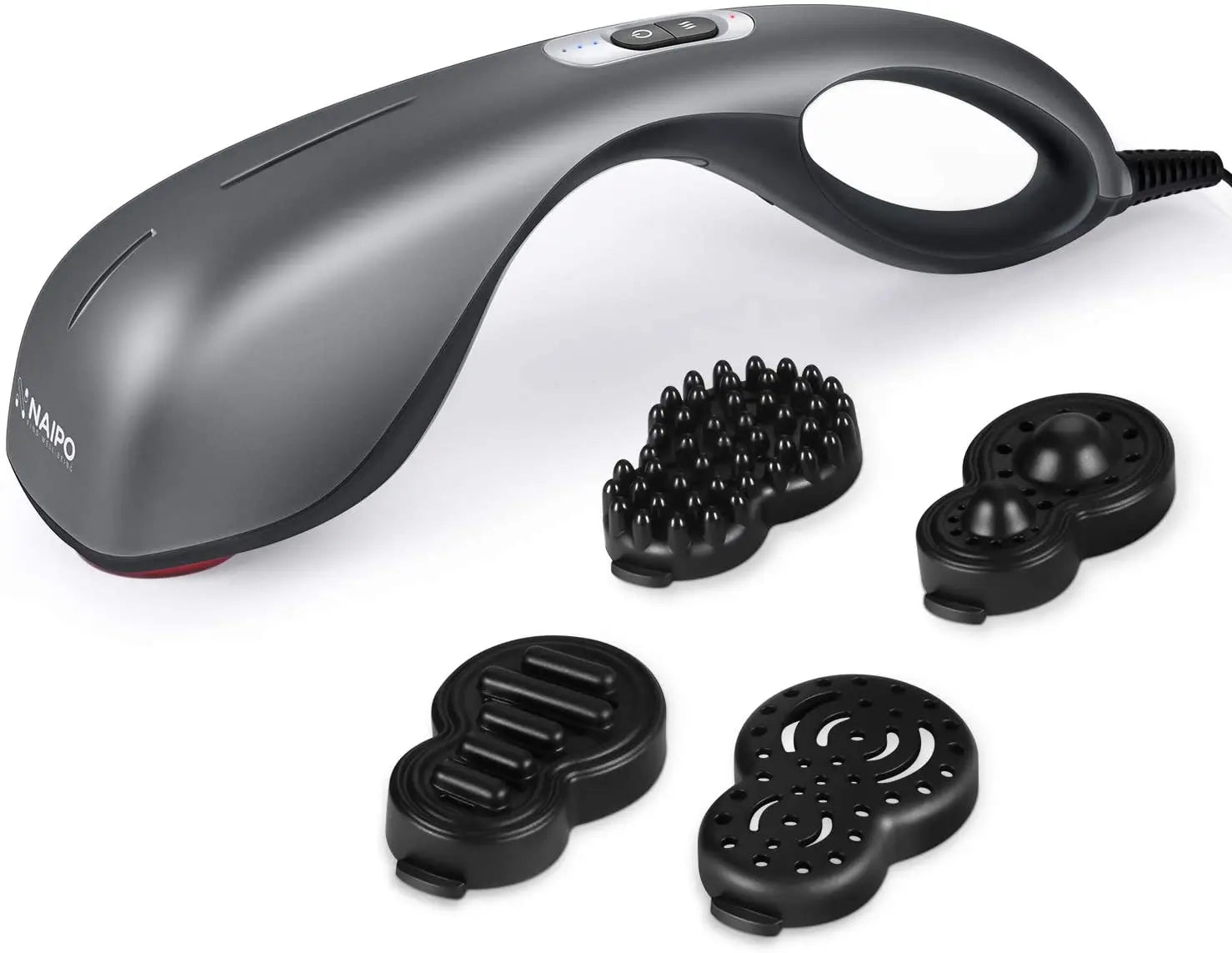





Devices designed to cover the neck and back come in two designs: as a cushion that you move from one area to another, and as a pad with a rail, whose massage heads travel the entire length. Both approaches work, but they each involve different trade-offs.
Show table of contents
Why it is difficult to create a single device for both
The neck and back have contrasting requirements. The neck is narrow, the muscles lie close to the skin, and sensitive structures run just a few centimetres further forward. There, you need tight nodes and gentle pressure.
The back is broad, covers a large area and has a bony support in the ribcage. Here, the distance between the massage heads can be greater and the pressure stronger. A device designed to cater for both must be adjustable; otherwise, it will only suit one of the two areas. For further details on what to look for when comparing back massagers, see the article Back massager test: what matters.
The cushion solution
A Shiatsu cushion with two handle loops is positioned where required. At the neck, you pull it tight with your arms; on the back, you wedge it between your body and the backrest. The advantage is the freedom it offers: every area is accessible, including the sides.
The disadvantage is that it doesn’t stay in place. If you want to cover your entire back, you’ll need to reposition the cushion several times. One device of this design, which is intended for both zones, is the Shiatsu neck and back massager.
The seat cushion solution
A seat cushion has a rail along which the mechanism moves from bottom to top. This means the back is covered in a single pass, and the top position reaches the neck. There’s no need to reposition it.
The compromise lies at the upper end of the scale. Because the same nodes, spaced at the same intervals, also work on the neck, the pressure there is often a touch too broad and too strong. Cushions with a separate neck zone solve this problem, but they cost more. This design is described in more detail in the article Massage Seat Cushion.
When two devices are the better choice
- When one area is used significantly more often. Anyone who massages their neck daily but rarely their back should buy a good neck massager rather than a mediocre combination unit.
- When two people use it. Different body heights mean different massage heights. In this case, two simple devices are better than a single combination device without adjustment.
- If travelling is a factor. A neck pillow fits in a travel bag; a massage seat cover does not.
What the combination really saves
The price saving is smaller than it seems, because a combination device requires slightly more technology in both zones. What you actually save is space and effort: one power supply, one storage space, one set of controls. Pillows and pads for both zones are listed in the overview of back massagers.
Anyone who wants their whole body covered, including arms, legs and feet, won’t find what they’re looking for in any combination model. That’s where massage chairs come in, and that’s a purchase on a completely different scale.
A point that is often overlooked
At the neck, a cushion works against the pull of your own arms; at the back, against the weight of your upper body. This is a significant difference in pressure, and it is not adjusted on the device itself, but rather through your posture.
Anyone who finds the pressure on their neck too strong simply lets go of the straps and rests their arms. Anyone who finds the pressure on their back too weak leans back further. On many machines, these two simple adjustments make up for the lack of adjustable pressure settings.
Cleaning and care
The cover absorbs sweat and skin oils, particularly at the nape of the neck. Removable covers can be washed, whilst sewn-on covers can only be wiped clean. Anyone who uses the device daily should ensure it has a removable cover; otherwise, it will start to smell after a year.
Frequently Asked Questions
Can a neck massage cushion also be used on the back?
Yes, a Shiatsu cushion with two handle loops can be positioned anywhere. On the back, you wedge it between your body and the backrest. However, to cover the whole back, you’ll need to reposition it several times.
Is a seat cushion too intense on the neck?
Often just a touch too much. Because the same pressure points are applied at the same intervals to the neck as well, the pressure there is frequently too widespread and too strong. Cushions with a separate neck zone solve this problem, but they cost more.
How can the pressure be adjusted without a multi-stage control?
Through your posture. If the pressure on your neck is too strong, loosen the straps and rest your arms. If the pressure on your back is too weak, lean back further.

Written by NAIPO Editorial Team · Massage & Product Experts from Hamburg
Product experts, service technicians, and massage enthusiasts at Alsterwell GmbH — specializing in massage technology for over a decade, with our own workshop and showrooms for test sitting.
Fact-checked by David Eberst · Co-founder of NAIPO



Leave a comment
This site is protected by hCaptcha and the hCaptcha Privacy Policy and Terms of Service apply.